
FF&E Fire Safety (UK)
When starting a design or refurbishment project for your business, aesthetics, branding, function and budget are the first points that come to mind. However, there is an essential consideration that should never be treated as an afterthought: fire safety and regulatory compliance.
When specifying furniture and interiors for commercial projects, fire safety should be considered from the very start of your project.
It isn’t as simple as choosing a fabric described as “fire retardant”. Requirements can vary depending on what the product is, who will be using it, and most importantly, what type of environment it will be placed within.
A hotel, restaurant and care home all have very different levels of risk and therefore can face different legislation for interiors.
For designers and developers, understanding these regulations can be complex. This guide looks specifically at fire regulations, breaking down the key areas to be aware of and why they impact your FF&E choices!
The Three Key Areas to Understand
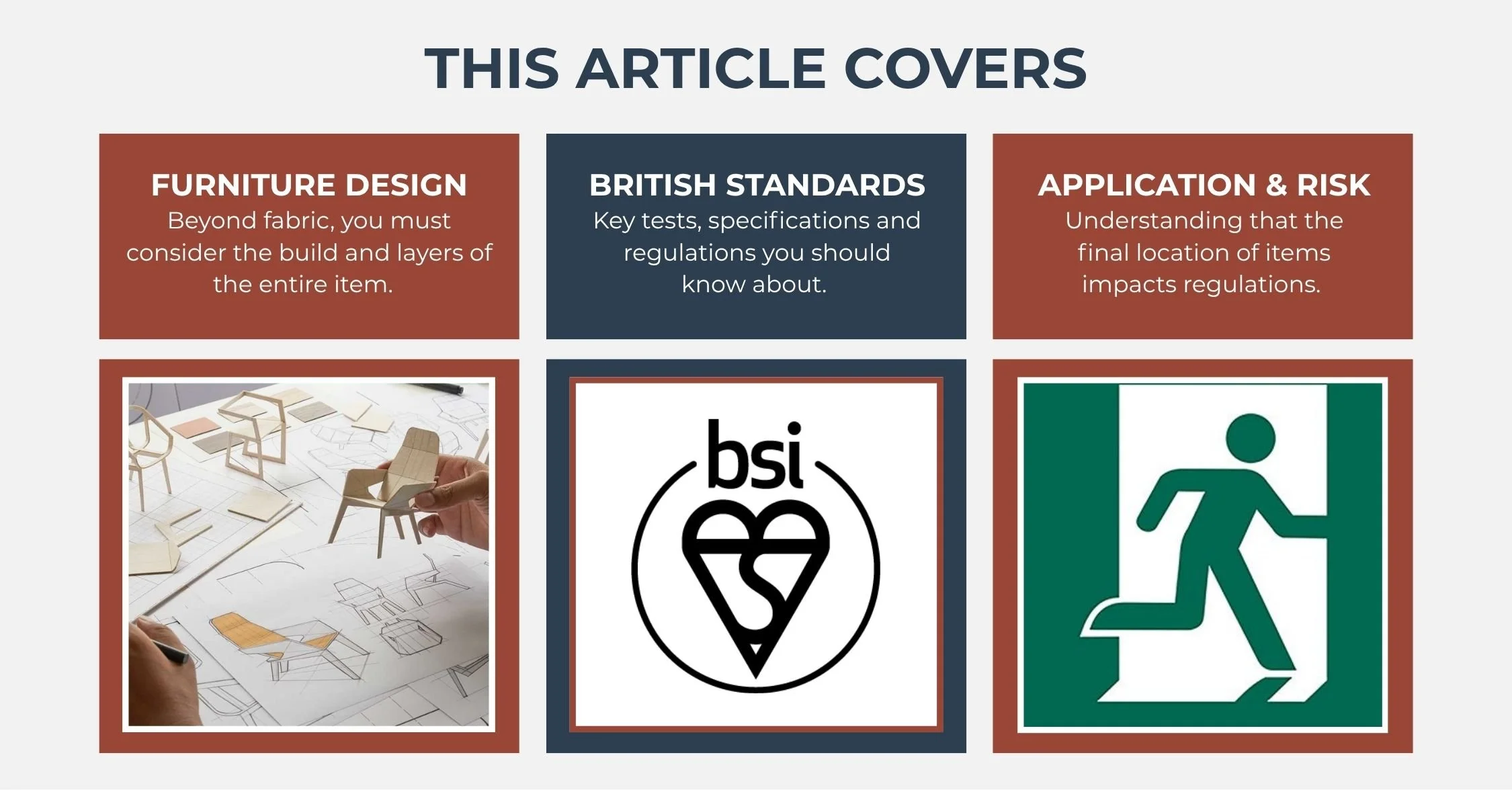
When considering fire safety within an FF&E specification, three key areas regularly come into play:
-
These regulations lay out the legal requirements related to the fire safety of furniture and furnishings. THese have been developed over time, most recently updated through the Furniture and Furnishings Regulation 2025.
They are particularly relevant when considering upholstered furniture, mattresses and other specified products.
-
These British standards are particularly important when specifying upholstered furniture for businesses.
BS 5852 is concerned with the ignitability of combinations of materials when exposed to specific ignition sources.
BS 7176 provides classifications for the resistance to ignition of upholstered seating intended for non-domestic use.
The term “Crib 5” is often used as a blanket description for these more specific tests and classifications, but is only one part of the wider framework of testing and performance requirements.
-
For textile products such as curtains nad blinds, BS 5867 is an important British Standard to understand. It covers the flammability eprformance of fabrics intended for windoe dressings.
The crucial point across all regulations, standards and tests is simple:
The appropriate level of fire performance depends heavily on the environment in which the FF&E will be used.
Why the Environment of Use Matters
One of the most common and dangerous mistakes is treating all FF&E projects in the same way. The level of risk associated with an item of furniture changes greatly depending on where it will be used.
Consider these examples:
A mattress within a luxury hotel bedroom, vs a mattress used within a secure unit.
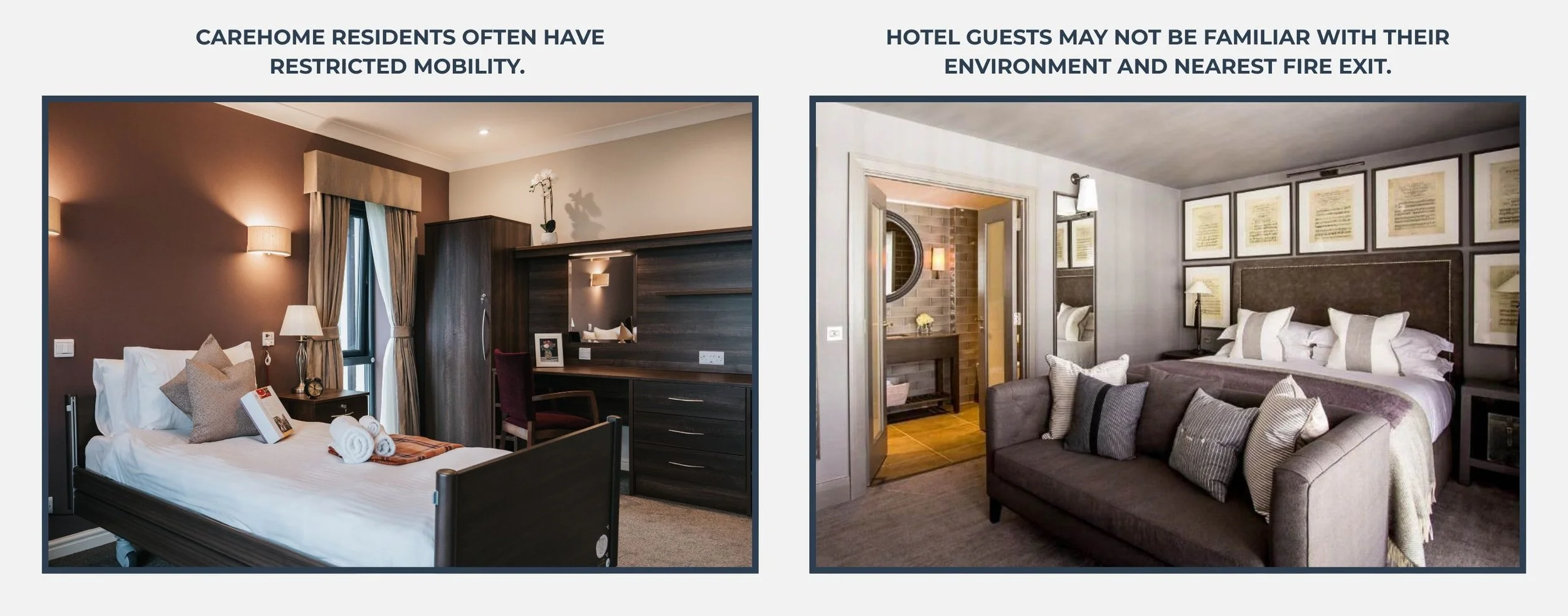
A chair in a hotel reception, compared to a chair in a care home where some users have limited mobility.
Student accommodation with a high number of occupants compared to a domestic residential home.
These environments all have different user profiles, risk assessments and evacuation considerations. As a result, the fire safety requirements of furniture MUST differ to ensure each place is equally as safe from fire!
Why are the Tests Important?
The various crib tests and British Standards assess the ignitability and fire performance of furnishings in a controlled testing environment. They examine the level and speed of fire damage, and the time to self-extinguish flames.
Importantly, compliance extends beyond the visible layer of upholstery fabric. The complete construction of furniture must be considered, including: the frame, interlinings, wadding, springs, fillings, foams and upholstery fabric.
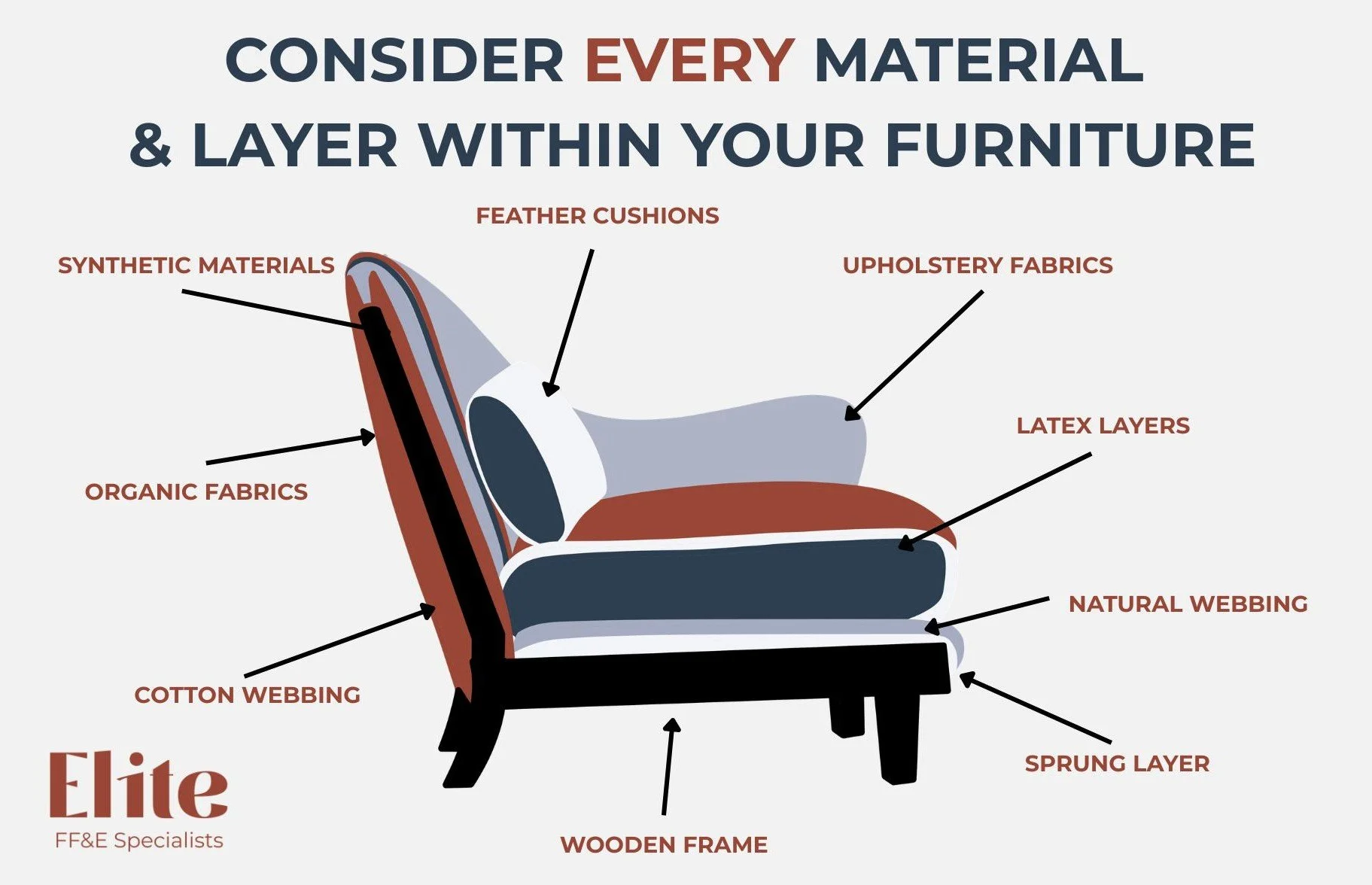
THE COMPLETE PRODUCT SPECIFICATION NEEDS TO BE UNDERSTOOD AND SAFE FOR USE

Learn More About Crib 5
Crib 5 is one of the most commonly referenced terms in commercial interiors, but it is also one of the most misunderstood.
To learn more about Crib 5 testing and view practical examples, read our dedicated article over at Elite Contract Furniture.
Why Compliance Should be Considered at the Specification Stage
The earlier fire safety is considered, the easier it is to manage. By involving an FF&E specialist during the specification stage, products can be selected with clear requirements in mind from the get-go.
An experienced FF&E partner can assist with:
-
Identifying the suitable levels of testing required, and identifying appropriate products and materials for the intended final use.
-
Obtaining and reviewing appropriate testing data, certifications and supporting documentation.
-
An FF&E partner will have experience working with trusted suppliers who understand and can demonstrate compliance.
-
When items are inevitably delayed, discontinued and exceed budget, they can easily identify appropriate, compliant alternatives.
-
They will maintain clear records of all specified products and ensure relevant compliance documentation is gathered for project handover.
FF&E Compliance Checklist
Before signing off on an FF&E package, ask:
What is the intended use of the space?
What level of fire performance is required for that environment?
Which regulations and standards apply?
Are upholstered products suitable for their intended application?
Has the entire product construction been considered?
Are curtains, blinds and soft furnishings specified to an appropriate standard?
Have any items been replaced during the project? If so, are the replacements compliant?
Has all the relevant compliance documentation been retained for handover?
If any of the above cannot be answered confidently, it is worth reviewing the specification before signing off on the project works.
The Role of an FF&E Supplier in Creating Safe Interiors
An FF&E partner’s role is not to replace the responsibilities of the building's Responsible Person, fire-safety consultants or other appointed specialists.
Instead, an experienced FF&E partner provides an additional layer of expertise throughout the specification, sourcing, procurement and delivery phases of a furnishing project.
In complex projects, you can have hundreds of products from multiple suppliers in a wide range of fabrics and finishes. This makes experience and knowledge highly valuable.
An experienced FF&E partner can help keep the original design vision on track while ensuring the right compliance questions are being asked throughout the project.