
Are FF&E Movers Enough?
How Delivery Consolidation Keeps Hospitality Projects on Schedule.
A hospitality refurbishment project involves items coming together from multiple manufacturers, countries and carriers. While there are many people involved in the design and sourcing of the right products, logistics often becomes the biggest unforeseen risk to programme deadlines.
We see many people searching for “FF&E Movers”. They are usually trying to solve a much bigger problem: ensuring the right products arrive at the right time, to the right place in the right order.
What Are FF&E Movers?
FF&E movers specialise in the handling of large-scale furniture, fixtures and equipment during commercial projects.
Their typical responsibilities include:
Receiving deliveries
Unloading products
Storage of items
Transportation to site
Placement into situ
Installation where needed
Waste packaging removal
These are largely practical tasks, moving products from A to B. Having the people power for successful delivery is an essential task, but only a small part of the broader FF&E project.
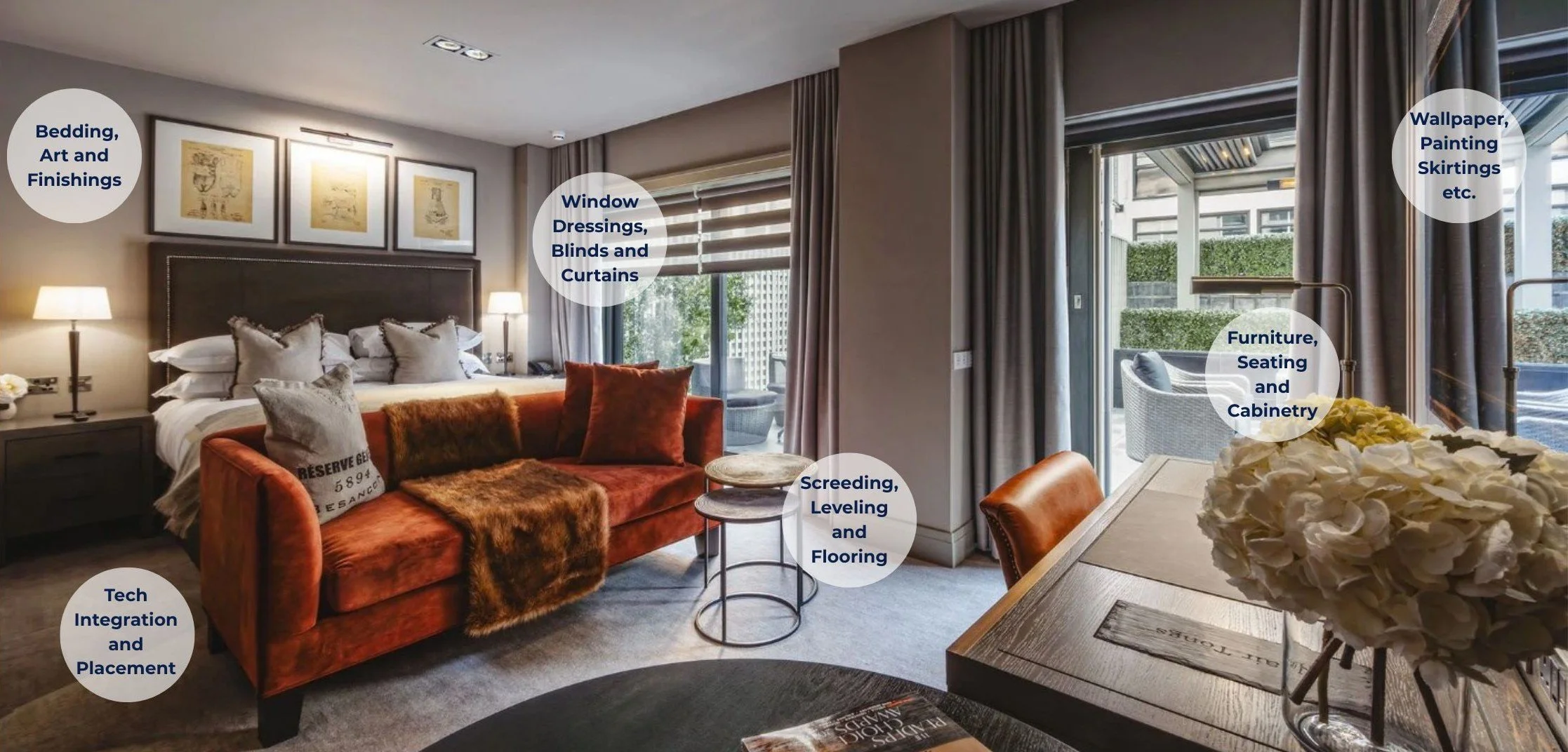
One Bedroom Requires Many Products and Expertise Coming Together
The Hidden Challenge: Managing Hundreds of Moving Parts
As shown above, a hotel fit-out involves many moving parts, just within the bedrooms. There are the same, if not more, components to plan for bars, restaurants, receptions and unique guest experience areas.
Even if you work with a singular FF&E supplier, all of these components are coming from different suppliers, at times from different companies and countries.
If not effectively managed, problems can occur with deliveries arriving too early or too late, products arriving damaged, construction being behind schedule, storage being unavailable or items arriving in the wrong order for installation.
Why Direct to Site Delivery Often Creates More Problems Than It Solves
It can be simple. Send everything directly to the hotel. However, this places a large burden and added responsibility on the site manager, with many potential problems arising due to a lack of oversight.
-
When FF&E arrives out of order, congestion can occur with a vast knock on effect.
-
Sites are often cluttered, unfinished and insecure. There are very few appropriate spaces for early items to be placed before installation.
-
Rough storage spaces and frequent movement of items being worked around, increases the risk of damage to items over time.
-
One missing or delay component delivery can affect multiple rooms.
Knock-on Effect
When a key item isn’t delivered, installation staff are left redundant or moved to push on with other areas of the refurbishment. This can mean inefficient use of staff, further movement of furniture, an increased risk of damage, and general chaos brought to the project.
The Value of FF&E Delivery Consolidation
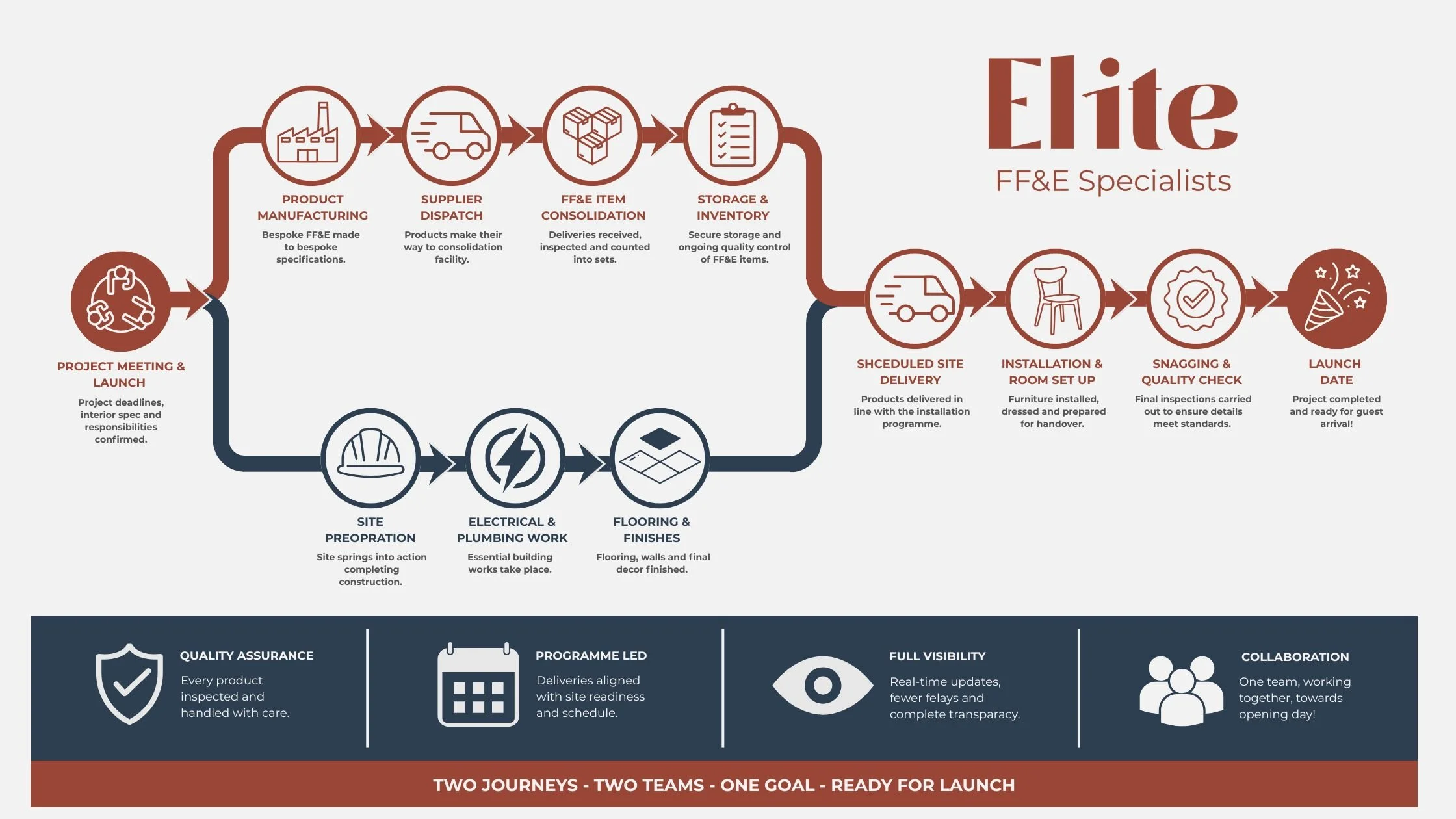
Rather than receiving dozens of separate deliveries directly to the site, consolidation involves products being received, inspected and managed through a central logistics process. From one central location, all FF&E products are then delivered according to the project’s installation programme.
Product Inventory Control
Every item is received at a central location. The consolidation centre conducts a quality check, ensuring no damage or faults to items before installation.
Reduced Site Disruption
Your FF&E partner understands the project schedules and communicates with the site manager. Products are therefore delivered only when needed.
Early Issue Identification
Supplier delays or shortages can be identified at the consolidation stage, rather than surprising the team on-site at the delivery stage, where there is less flexibility.
Reduced Pressure on Site Teams
Assigning responsibility for FF&E delivery allows contractors and site managers to focus on completing the build.
Why Timing Matters More than Speed
The best delivery isn’t necessarily the fastest one – it’s the one that arrives exactly when everyone is ready for it. Fast delivery is no use when the floors aren’t installed within the building. Next-day delivery isn’t beneficial if the site isn’t secure and items may go missing. Hospitality projects need controlled, planned and scheduled delivery.
Conclusion
While FF&E movers play an important role in hospitality projects, successful outcomes depend on much more than transportation alone. From receiving and inspection through to consolidation, storage and phased delivery, an effective logistics manager helps reduce risk, minimise site disruption and keep projects to deadline.
Whether delivering a boutique hotel refurbishment, restaurant fit-out or specialist care home installation, the goal is not just moving furniture – it’s ensuring every item is in the right place, at the right time, ready for opening day!